The retail industry’s next smart move must be data driven




This article has been supplied.
By: Charles Coetzee - Buildings & C&SP Lead for Sub-Saharan Africa at Schneider Electric
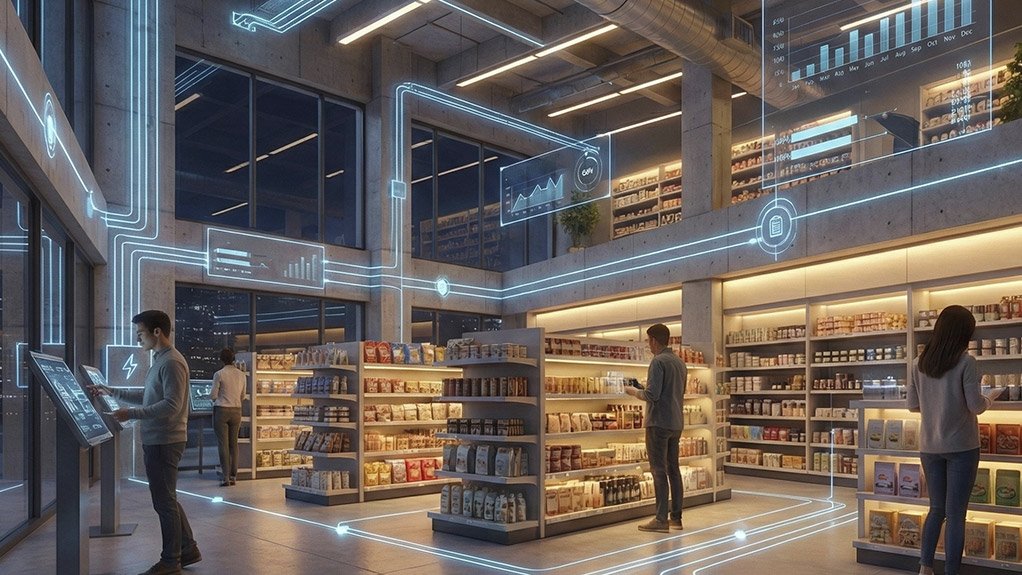
Large-scale retailers operate with notoriously tight margins while managing some of the most energy-intensive environments in the commercial sector. In supermarkets, for example, refrigeration alone can account for significant amount of energy use, followed by HVAC and lighting.
Compounding the above, is a convergence of pressures; rising tariffs, grid instability, and mounting expectations to decarbonise, this all while ensuring uptime and delivering a seamless customer experience across, often, extensive store networks.
Indeed, it’s a lot to contend with which is why there is tremendous opportunity to rethink energy not simply as a cost to control, but as a strategic value proposition that allows for cost savings, efficiency and ultimately, brand value.
From cost control to strategic energy management
The good news is, retailers are increasingly treating energy as core business risk and with it seeking tangible solutions that can make a difference in the way it is managed.
Accelerating this above is decarbonisation requirement, which, in turn, is pushing organisations to take a longer-term, structured view of their energy strategies. For one, this means moving beyond short-term fixes towards portfolio-level orchestration, where energy performance, carbon reduction and resilience are managed holistically.
In practice, this is also driving several key changes:
- Designing stores for continuity during grid disruption.
- Embracing electrification and digitalisation.
- Implementing active energy management strategies that continuously adapt to operational realities.
One step at a time
However, to find solutions to this myriad of challenges, we have to take one step back. Retailers cannot manage what they cannot see. The first step is therefore visibility: making energy consumption transparent across sites.
This will then expose inefficiencies which can (often) be remedied easily. These will then lead to the implementation of non-disruptive interventions like optimising schedules and automating controls, delivering tangible saving without interfering with daily customer experience.
Next, is taking a phased approach which allows retailers to capture early value while building long‑term capability. This entails establishing a baseline of energy and operational performance which highlights waste while also implementing predictive monitoring that will strengthen uptime by addressing issues before they disrupt operations. This all can be standardised and scaled.
A single view across the portfolio
One of the most significant barriers to effective energy management has historically been fragmentation. Often, stores will operate with their own systems, data and processes.
Here, cloud-based platforms such as Schneider Electric’s EcoStruxure Energy Hub and EcoStruxure Building Activate will standardise data collection across these stores and bring it into a centralised environment.
The benefit? Retailers gain access to real-time dashboards, alerts and benchmarking tools that enable consistent performance tracking across all sites.
This centralisation also supports role-based access, ensuring that everyone, from store managers to head office teams, can interact with the data in a way that is relevant to their responsibilities.
Importantly, these platforms are designed to scale, allowing retailers to expand from a handful of connected stores to hundreds without needing to redesign their systems.
As an example, a leading global apparel retailer with more than 2,000 European stores faced rising energy costs and mounting sustainability pressures, while still needing to ensure a comfortable shopping experience.
To address these challenges, the retailer partnered with Schneider Electric to deploy EcoStruxure Building Activate across 209 stores. The initiative delivered lower operating costs, improved customer comfort, and measurable progress toward sustainability goals.
Ultimately, solutions like EcoStruxure Building Activate can offer the following important benefits to the retail industry on their journey to energy efficiency, optimised operations and decarbonisation:
- Offers baseline monitoring which provide insight into energy use, HVAC runtime, lighting, and refrigeration, It also sets after-hours benchmarks and supports unplanned outage recovery. Portfolio dashboards will also highlight high risk sites.
- Quick wins and uptime - that enable centralised HVAC and lighting control by trading hours, remote setpoints, and abnormal condition alerts to cut waste and staff reliance. It also adds condition-based alerts, ticketing, and remote diagnostics to reduce breakdowns and maintenance costs.
- Scaling and sustainability – the next moves toward standardising of store archetypes, sensor kits, and KPIs for rapid national rollout with consistent governance. Longer-term goals include carbon and energy reporting, load visibility for backup power investments, and data-driven capital expenditure prioritisation to support ESG reporting and smarter energy investments.
Article Enquiry
Email Article
Save Article
Feedback
To advertise email advertising@creamermedia.co.za or click here
Research Reports

Projects



Latest News

Showroom

For over 15 years, Lilak Aluminium, a trusted leader in architectural extrusion supply, has delivered excellence to businesses like yours.
VISIT SHOWROOM
Rentech provides renewable energy products and services to the local and selected African markets. Supplying inverters, lithium and lead-acid...
VISIT SHOWROOM


Announcements
What's On
Subscribe to improve your user experience...
Option 1 (equivalent of R125 a month):
Receive a weekly copy of Creamer Media's Engineering News & Mining Weekly magazine
(print copy for those in South Africa and e-magazine for those outside of South Africa)
Receive daily email newsletters
Access to full search results
Access archive of magazine back copies
Access to Projects in Progress
Access to ONE Research Report of your choice in PDF format
Option 2 (equivalent of R375 a month):
All benefits from Option 1
PLUS
Access to Creamer Media's Research Channel Africa for ALL Research Reports, in PDF format, on various industrial and mining sectors
including Electricity; Water; Energy Transition; Hydrogen; Roads, Rail and Ports; Coal; Gold; Platinum; Battery Metals; etc.
Already a subscriber?
Forgotten your password?
Receive weekly copy of Creamer Media's Engineering News & Mining Weekly magazine (print copy for those in South Africa and e-magazine for those outside of South Africa)
➕
Recieve daily email newsletters
➕
Access to full search results
➕
Access archive of magazine back copies
➕
Access to Projects in Progress
➕
Access to ONE Research Report of your choice in PDF format
RESEARCH CHANNEL AFRICA
R4500 (equivalent of R375 a month)
SUBSCRIBEAll benefits from Option 1
➕
Access to Creamer Media's Research Channel Africa for ALL Research Reports on various industrial and mining sectors, in PDF format, including on:
Electricity
➕
Water
➕
Energy Transition
➕
Hydrogen
➕
Roads, Rail and Ports
➕
Coal
➕
Gold
➕
Platinum
➕
Battery Metals
➕
etc.
Receive all benefits from Option 1 or Option 2 delivered to numerous people at your company
➕
Multiple User names and Passwords for simultaneous log-ins
➕
Intranet integration access to all in your organisation